Amazon Supply Chain Services: What the ASCS Rebrand Actually Means for $10M+ Sellers
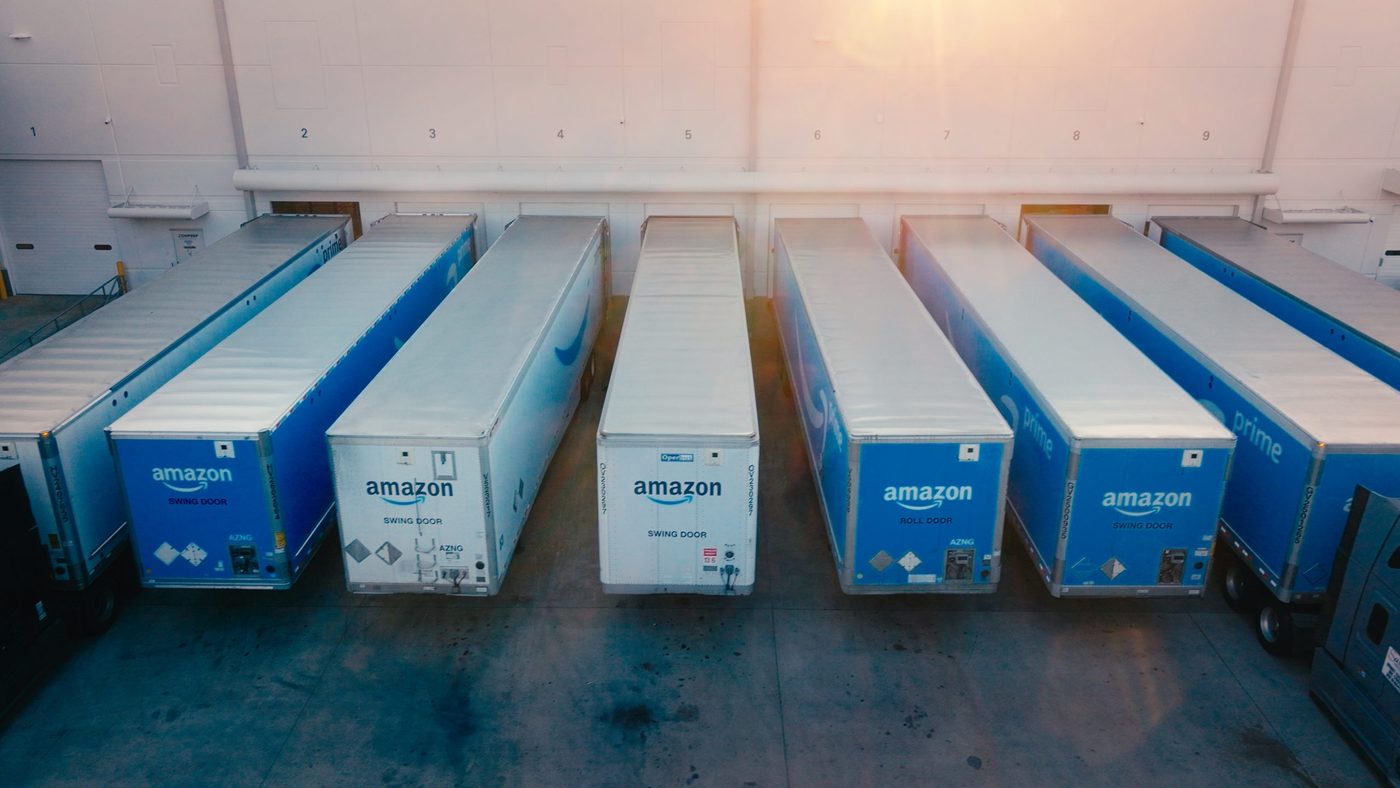
Amazon rebranded its logistics portfolio and named P&G, 3M, Lands' End, and American Eagle as early adopters. Here is what that signal means for sophisticated Amazon operators -- and why your inbound strategy just became more important, not less.
What Amazon Actually Announced
On May 13, 2025, Amazon announced the renaming of its unified logistics portfolio from "Supply Chain by Amazon" to Amazon Supply Chain Services (ASCS). The rebrand is not the news. The strategic framing around it is.
ASCS is an umbrella that packages twelve distinct services into a single go-to-market offering:
- Amazon Global Logistics (AGL) -- ocean and air freight from manufacturer to Amazon network
- Seller Export and Delivery (SEND) -- customs clearance and international shipping
- Amazon Air Cargo -- domestic air freight
- Partner Carrier Program (PCP) -- discounted carrier rates to Amazon FCs
- Amazon Freight -- truckload and LTL domestic freight
- Amazon Warehousing and Distribution (AWD) -- bulk upstream storage
- Multi-Channel Distribution (MCD) -- AWD-to-non-Amazon fulfillment
- Fulfillment by Amazon (FBA) -- pick, pack, ship from Amazon FCs
- Multi-Channel Fulfillment (MCF) -- FBA network for non-Amazon orders
- Buy with Prime -- Amazon checkout and fulfillment for DTC sites
- Amazon Shipping -- last-mile delivery services
- Amazon Managed Service -- end-to-end supply chain management
Amazon is positioning this stack not just for Amazon sellers, but for businesses broadly -- explicitly naming healthcare, automotive, manufacturing, and retail verticals. The named early adopters from the press release are Procter & Gamble, 3M, Lands' End, and American Eagle Outfitters.
Peter Larsen, VP of ASCS, framed the announcement this way in Amazon's official release: Amazon is "bringing the infrastructure, intelligence, and scale of its supply chain services -- proven over decades -- to businesses everywhere."
Amazon cited 80 billion units shipped by independent sellers through FBA since 2006, and its own claim that sellers using its end-to-end logistics solutions see "nearly 20% higher sales." That second figure is Amazon's internal data, not independently verified research, and should be evaluated accordingly.
On pricing, Amazon is offering a bundle incentive: 20% off AWD storage and 10% off transportation when sellers combine AGL, SEND, or PCP with downstream Amazon services. That discount structure matters strategically, and we will return to it.
| A NOTE ON SOURCING |
| This analysis was written as of May 16, 2026. ASCS was announced in May 2025. The named early adopters, service list, pricing language, and strategic framing are drawn directly from Amazon's official press release and the ASCS product page, both linked in the sources section. |
Argument 1: Amazon Just Priced Supply Chain as a Competitive Capability
For the first eighteen years of FBA's existence, Amazon's pitch to sellers was essentially a utility argument: hand us the logistics, focus on selling. Supply chain was positioned as infrastructure -- something you used so you didn't have to think about it.
ASCS reframes that entirely. By packaging its logistics stack and selling it to Procter & Gamble -- a company with its own freight contracts, its own warehouses, and its own logistics teams built over a century -- Amazon is stating explicitly that this infrastructure has strategic value, not just operational value. If P&G is buying it, it is not a utility. It is a capability.
That reframe has a direct implication for sellers doing serious volume.
If Amazon believes its supply chain is worth packaging as a premium product for enterprise buyers, then inbound performance, prep quality, check-in speed, and inventory placement are strategic functions -- not line items to minimize. Every serious operator running $10M+ on Amazon should be asking the same question Amazon just answered for P&G: what does independent logistics capability look like for my business?
| STRATEGIC IMPLICATION |
| "If your answer to that question is 'I trust FBA to figure it out' -- that is not a strategy. That is a default. And defaults become expensive when the network serving you is also serving P&G." |
The prep step matters. Inbound timing matters. How fast units check in at the FC matters. Whether they land in the right placement node matters. None of this is automatic. It is earned through operational precision -- and Amazon just told the market that operational precision has a dollar value.
Argument 2: Finite Capacity, More Competitors for It
Amazon operates one of the largest logistics networks in the world. It is not, however, unlimited. There are a finite number of trucks, a finite number of FC dock doors, and a finite number of Carrier Central appointment slots on any given day.
ASCS is designed to route enterprise freight -- P&G, 3M, Lands' End, American Eagle -- through that same network. When those volumes scale, marginal capacity tightens. That is not speculation. That is how logistics networks function under increased demand.
Sellers will not see a press release when this happens. They will see it in their operational data:
- Longer FC inbound check-in windows as dock capacity is shared across a larger enterprise customer base
- Tighter Carrier Central appointment availability particularly during peak season and at high-velocity FCs
- Peak storage cost exposure -- Amazon's published AWD rates move from $0.48 per cubic foot per month (January through September) to $2.40 per cubic foot per month during peak season Q4. That is a 5x cost increase, and it hits hardest when FC capacity is most constrained.
This dynamic is not unique to Amazon. It is the same pattern that played out with AWS. As Amazon's cloud infrastructure scaled to serve enterprise customers like Capital One and NASA, startups and mid-market companies found that the relationship required more deliberate management -- not because Amazon got worse, but because the network was serving a much broader and more demanding customer base.
The sellers who will compound advantages in this environment are the ones who have already secured priority inbound access -- partners whose entire operational model is built around Amazon Carrier Central priority check-in for serious Amazon sellers. That gap between a 24-to-48-hour inbound window and a 30-to-43-day industry standard does not shrink when network capacity tightens. It widens.
| RATE TRANSPARENCY NOTE |
| Amazon's published AWD storage pricing (off-peak vs. peak) is available on Amazon's AWD documentation page. The rates cited -- $0.48/cubic foot/month and $2.40/cubic foot/month -- reflect Amazon's published schedule. Amazon updates these rates seasonally; verify current rates before making storage decisions. |
Argument 3: The Bundle Discount Is Lock-In Structured as Savings
Amazon's ASCS bundle pricing is worth reading carefully:
| "Save 20% on AWD storage and 10% on transportation when combining AGL, SEND, or PCP." |
The discount structure is legitimate. The math behind it requires more scrutiny than Year 1 savings.
Sophisticated operators have seen this playbook before -- AWS bundle pricing, Salesforce SKU stacking, SAP module discounts. The mechanism is the same: stack services until switching costs become prohibitive, then price from a position of leverage. The discount is real. The cost of dependency is also real, and it compounds over time.
Three numbers actually matter when evaluating a logistics bundle:
- Year 1 cash savings from the discount -- what you save by stacking services
- Year 3 switching exposure if Amazon changes pricing, fee structures, or terms -- what it would cost to rebuild the capability outside Amazon's stack
- Ongoing opportunity cost of single-sourcing a function that directly determines your gross margin -- the strategic value of optionality
For most operators doing serious volume, the bundle math looks different when you include all three variables. The 20% AWD discount is meaningful. But Amazon has raised FBA fees, inbound placement fees, and storage fees multiple times in the past three years. Single-sourcing your supply chain to the same entity that controls your fee structure is a strategic exposure that does not appear in Year 1 pricing.
A prep partner whose entire business depends on your success -- not on upselling you into a service bundle -- has structurally different incentives. That alignment is worth pricing honestly.
Argument 4: Your Logistics Infrastructure Now Serves Your Direct Retail Competition
This is the part of the ASCS announcement most sellers will read past. It deserves a full stop.
Lands' End is an ASCS early adopter. They compete on Amazon and compete with private-label sellers in apparel, home goods, and accessories. American Eagle Outfitters is an ASCS early adopter. They compete in apparel and lifestyle categories with significant Amazon seller overlap.
Your inventory, your inbound timing, your SKU velocity signals, and your fulfillment routing now flow through infrastructure that also serves those brands.
To be clear about what this analysis is and is not: Amazon has not disclosed how data is shared or siloed across the ASCS customer base. There is no verified evidence that seller data is cross-accessed by enterprise ASCS customers. Sellers should not speculate beyond what is verifiable. What sellers should do is price the risk.
A reasonable operator running $10M+ in annual Amazon revenue should be asking these questions:
- Does my SKU velocity data flow through systems that also serve a direct category competitor?
- Is my inventory forecast information used to inform anyone else's positioning decisions?
- What is Amazon's contractual position on cross-customer data use under ASCS?
- Is the AWD placement algorithm positioning my inventory differently based on competing enterprise priorities?
| ANALYTICAL FRAMING |
| These are risk-modeling questions, not accusations. Amazon's first-party retail has always competed with private-label sellers -- that conflict has existed since Marketplace launched. ASCS makes the overlap more explicit by adding enterprise retail brands as infrastructure co-tenants. The strategic question is how much exposure you are comfortable with, and whether it changes how you manage inbound routing and data hygiene. |
Tips for Sophisticated Operators
The sellers who will compound advantages over the next 24 months are not fighting Amazon. They are making deliberate decisions about which parts of the supply chain they own independently and which parts they route through Amazon's ecosystem. Five operating decisions separate the operators who get this right:
1. Treat Inbound Prep as a Revenue Function
Your prep partner determines how fast units go live at the FC. That is not a procurement decision -- it is a revenue timing decision. A 30-to-43-day inbound window versus a 24-to-48-hour inbound window is a direct cash flow variable. Operators who manage it as a strategic function outperform operators who treat it as a line item to minimize.
2. Select Partners Whose Interests Are 100% Aligned
A prep partner that does not sell on Amazon, does not compete for FC capacity with first-party retail inventory, and does not bundle additional services into the relationship is structurally aligned with your success. Amazon is structurally not -- not because Amazon is adversarial, but because Amazon's first-party retail business, its logistics infrastructure, and its enterprise ASCS revenue all operate from the same network. Alignment is not guaranteed. It has to be built into the partner selection decision.
3. Maintain Off-Amazon Fulfillment Optionality
MCF, third-party 3PLs, Buy with Prime -- sophisticated sellers have tested and can activate non-Amazon fulfillment paths. ASCS makes this more important, not less. If Amazon changes fee structures, tightens capacity, or shifts network priorities toward enterprise ASCS customers, operators with tested alternative fulfillment paths absorb that change. Operators who have single-sourced fulfillment do not.
4. Audit Every Bundle Discount for Switching Cost
The 20% AWD storage discount is a math problem that requires all three variables: Year 1 savings, Year 3 switching exposure, and ongoing opportunity cost of single-sourcing. Run the numbers honestly. Include the cost of optionality. The bundle that looks like savings in Year 1 can look like lock-in by Year 3.
5. Secure Priority Carrier Central Access
Amazon's Carrier Central appointment system has priority lanes. Prep partners with serious volume and clean compliance histories earn priority check-in status. That operational advantage compounds as ASCS scales enterprise volume through the same network. Sellers whose prep partners have earned priority access get their units to live status faster. That gap widens when capacity tightens -- not because they do anything differently, but because their partners already have the relationship.
| ZONPREP |
| At ZonPrep, the entire operation is built around this thesis. 24 to 48-hour inbound processing vs. the 30 to 43-day industry standard. Priority check-in via Amazon Carrier Central. 99.9% accuracy. 400,000 square feet. Built by former Amazon sellers who run it like operators. If Amazon believes their supply chain is worth selling to P&G, your supply chain is worth getting serious about. |
The Bottom Line on Amazon Supply Chain Services
Amazon renaming its logistics portfolio is a press release. Amazon naming P&G, 3M, Lands' End, and American Eagle as enterprise customers for that same infrastructure is a strategic signal.
For eighteen years, the FBA pitch was: trust us with logistics. ASCS tells you, in enterprise pricing, that logistics is the value. Not the marketplace. Not the buyer base. The supply chain itself.
Sellers who hear that signal and respond -- by investing in specialized inbound partners, maintaining off-Amazon optionality, and treating logistics as a strategic function rather than a line item -- compound advantages over the next 24 months.
Sellers who lean further into the Amazon bundle accept the lock-in. They get the 20% storage discount. They also accept tighter capacity, less leverage, and less ability to route around Amazon when Amazon changes the rules.
The play is not to fight Amazon. The play is to make sure your logistics stack is yours -- not theirs.
Learn More: Further Sources
Review the sources that this article pulled from below.
- Amazon Supply Chain Services (ASCS) -- Official product page, service list, and bundle pricing language
- Amazon Press Release -- ASCS announcement, named early adopters (P&G, 3M, Lands' End, American Eagle)
- Amazon Warehousing and Distribution (AWD) -- Published storage rates including peak vs. off-peak pricing
- Amazon FBA Fee Changes History -- Amazon's public fee schedule and historical updates
- Amazon Carrier Central -- Carrier appointment scheduling documentation
- Amazon Multi-Channel Fulfillment (MCF) -- Service documentation
- Amazon FBA Inbound Placement Fee -- Documentation on placement fee structure
- Reddit r/FulfillmentByAmazon -- Seller community discussions on inbound timing, Carrier Central, and prep center performance
- Amazon Seller Forums -- Fulfillment and shipping category discussions